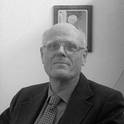
Professor Emeritus, Urban Policy and Administration
The primary focus of my policy research has been woven around four subtexts: urban land use and economic development, globalization, public agency behavior, and policy consequences (agency performance, socioeconomic equity and environmental quality). To date, this work has been reported in five books, over two dozen referred journal articles, and numerous professional conference presentations. In the early period (1970-1985), my principal work was on corporate-inspired development of rural resort/recreation communities, and is best found in the book, Land Use Conflicts (University of Illinois Press, 1982) which examined alternative approaches to government policymaking in dealing with the consequences of rural transformations. In the mid 1980s, my research shifted to globalization and maritime trade. Its principal focus was on public entrepreneurial behavior during the "container revolution" at American seaports. The research is comprehensively reported in the book, Strategic Design and Organizational Change (University of Alabama Press, 1988). In the 1990s, my research interests shifted to urban infrastructure policy with a focus on regional public transit agencies. The research is found in the book, Social Class, Politics and Urban Markets (Stanford University Press, 2002), which examines agency policy outcomes and their consequences for different regional constituencies. It received the 2003 best book in public policy from the Academy of Management. My work since 2003 is on globalization and its value in differentiating American cities. The research is multi-faceted. First, given the inadequacy of "global city" definitions, the research has constructed a theory-driven profile of 7 dimensions to empirically discern global from less-global cities. Work on this has been reported internationally at conferences and is published in the January, 2008 issue of Urban Studies. Second, the composite of this work is being used both as a dependent variable dealing with socioeconomic and governmental antecedents of the global city, and as an independent variable looking at global-city consequences (i.e., socioeconomic polarization, inequality, traffic congestion, environmental sustainability, culture and lifestyle). On this continuing research, an article was published in the July, 2013 issue of Urban Studies, under the title "Global Cities are Coastal Cities Too: A Sustainability Paradox?" Another article was published in the American Review of Public Administration in February, 2017, under the title "Aligning a Multi-Government Network with Situational Context: Metropolitan Governance as a Systems Problem." Two more papers on global cities were published in 2022, one in the Journal of Urban Affairs, entitled "Economic Inequality in U.S. Global Cities", and the other in the journal Cities, entitled Income "Inequality and the Imprint of Globalization on U.S. Metropolitan Areas." Both articles deal with the question of whether globalization can be considered an independent cause of economic inequality in metropolitan areas.
×
About Herman L. Boschken
The primary focus of my policy research has been woven around four subtexts: urban land use and economic development, globalization, public agency behavior, and policy consequences (agency performance, socioeconomic equity and environmental quality). To date, this work has been reported in five books, over two dozen referred journal articles, and numerous professional conference presentations. In the early period (1970-1985), my principal work was on corporate-inspired development of rural resort/recreation communities, and is best found in the book, Land Use Conflicts (University of Illinois Press, 1982) which examined alternative approaches to government policymaking in dealing with the consequences of rural transformations. In the mid 1980s, my research shifted to globalization and maritime trade. Its principal focus was on public entrepreneurial behavior during the "container revolution" at American seaports. The research is comprehensively reported in the book, Strategic Design and Organizational Change (University of Alabama Press, 1988). In the 1990s, my research interests shifted to urban infrastructure policy with a focus on regional public transit agencies. The research is found in the book, Social Class, Politics and Urban Markets (Stanford University Press, 2002), which examines agency policy outcomes and their consequences for different regional constituencies. It received the 2003 best book in public policy from the Academy of Management. My work since 2003 is on globalization and its value in differentiating American cities. The research is multi-faceted. First, given the inadequacy of "global city" definitions, the research has constructed a theory-driven profile of 7 dimensions to empirically discern global from less-global cities. Work on this has been reported internationally at conferences and is published in the January, 2008 issue of Urban Studies. Second, the composite of this work is being used both as a dependent variable dealing with socioeconomic and governmental antecedents of the global city, and as an independent variable looking at global-city consequences (i.e., socioeconomic polarization, inequality, traffic congestion, environmental sustainability, culture and lifestyle). On this continuing research, an article was published in the July, 2013 issue of Urban Studies, under the title "Global Cities are Coastal Cities Too: A Sustainability Paradox?" Another article was published in the American Review of Public Administration in February, 2017, under the title "Aligning a Multi-Government Network with Situational Context: Metropolitan Governance as a Systems Problem." Two more papers on global cities were published in 2022, one in the Journal of Urban Affairs, entitled "Economic Inequality in U.S. Global Cities", and the other in the journal Cities, entitled Income "Inequality and the Imprint of Globalization on U.S. Metropolitan Areas." Both articles deal with the question of whether globalization can be considered an independent cause of economic inequality in metropolitan areas.
| 2014 - Present | Professor Emeritus, San Jose State University ‐ Organization and Management | |
|
|
||
| 2014 - Present | Professor Emeritus, San Jose State University ‐ Emeritus Faculty | |
|
|
||
| 1983 - 2014 | Professor, San Jose State University ‐ Organization and Management | |
|
|
||
Disciplines
Research Interests
Grants
| 1979 - 1981 | Economic development at American Pacific Rim seaports during the “container Revolution” and upstart period of contemporary economic globalization |
| Dept. of Commerce, NOAA | |
| Federal Sea Grant | |
| Role: Principal Investigator | |
| $85,000 | |
| 1978 - 1979 | Proposition 13 impacts on California land use |
| Lincoln Foundation | |
| Role: Co-Principal Investigator | |
| $20,000 | |
| 1977 | Agency's policy effectiveness and performance |
| California Department of Real Estate | |
| California Department of Real Estate Grant | |
| Role: Co-Principal Investigator | |
| $50,000 | |
| 1976 | Research monograph on land use conflicts |
| San Diego State University | |
| Role: Summer Faculty Fellow |
Professional Service and Affiliations
| 2016 - Present | Article Referee, American Review of Public Administration | 2011 - Present | Commissioner, Planning Commission, City of Davis, California | 2009 - Present | Article Referee, JOURNAL OF PUBLIC ADMINISTRATION RESEARCH & THEORY | 2008 - Present | Article Referee, URBAN STUDIES | 1989 - Present | Article Referee, PUBLIC ADMINISTRATION REVIEW | 2015 - 2016 | Chair, Task Force on Revisions of the Core Area [Downtown] Specific Plan, City of Davis, California | 1988 - 2013 | Article Referee, URBAN AFFAIRS REVIEW | 2006 - 2011 | Commissioner, UNITRANS (Davis, CA Transit) Advisory Commission | 2005 - 2011 | Commissioner, Natural Resources Commission, City of Davis, California | 2000 - 2007 | Article Referee, ADMINISTRATION & SOCIETY | 2005 - 2006 | Reviewer, Research Proposals, National Science Foundation | 1983 - 2004 | Article Referee, PUBLIUS: THE JOURNAL OF FEDERALISM, | 1994 - 1998 | Editor, INTERMODAL FARE, News Journal of the American Society for Public Administration Section on Transport | 1993 - 1998 | Board Member, Section on Transportation Policy and Administration, American Society for Public Administration | 1984 - 1992 | Article Referee, Policy Studies Review | 1991 | Member, Herbert Kaufman Award Selection Committee, American Political Science Association. | 1982 - 1990 | Article Referee, COASTAL ZONE MANAGEMENT JOURNAL, | 1981 - 1983 | Member, Housing and Community Development Advisory Commission, County of Yolo, California | 1978 - 1982 | Associate Editor, POLITICAL RESEARCH QUARTERLY, a refereed publication of the Western Political Science Association |
Honors and Awards
- 2003 - Best Book of 2002-03, Public Sector, Academy of Management
- 2000-2001 - The Fulbright New Brunswick Distinguished Chair in Property Studies, CIES Fulbright Distinguished European Chairs Program, Canada Award
- 1992 - Statewide Faculty Fellow, California State University
- 1990 - Herbert Kaufman Award, American Political Science Association
- 1988 - Charles H. Levine Award, Public Sector, Academy of Management
- 1986 - Jeffrey Pressman Award, Best Article in Policy Studies Review
- 1983 - Fulbright Senior Research Scholar, Political Science and Geography, Umea University, Sweden
- 1972 - Edna Benson Dissertation Award, University of Washington, Seattle
| 1972 | PhD, University of Washington - Seattle Campus | |
|
|
||
| 1968 | MBA, University of California - Berkeley ‐ Walter Haas School of Business | |
|
|
||
| 1967 | B.S., University of California - Berkeley ‐ Walter Haas School of Business | |
|
|
||
Contact Information
711 Puma Court
Davis, CA, 95618