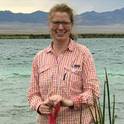
Professor
Karin received her Ph.D. in Applied Plant Sciences from the University of Minnesota. Prior to coming to USU in 2008, she was a Postdoctoral Fellow at the Smithsonian Environmental Research Center in Edgewater, MD. Her research interests include the restoration of plant communities in wetlands and the ecology and management of invasive plants. Her Ph.D. research focused on the seed ecology and revegetation of sedges (Carex species) in prairie pothole wetlands. During her postdoctoral research, she studied the genetics and spread of the non-native plant Phragmites australis (common reed), that is invading wetlands across North America. At USU, she will continue to develop her research program in wetland plant ecology and teach a course in wetland ecology and management.
read more
×
About Karin Kettenring
Karin received her Ph.D. in Applied Plant Sciences from the University of Minnesota. Prior to coming to USU in 2008, she was a Postdoctoral Fellow at the Smithsonian Environmental Research Center in Edgewater, MD. Her research interests include the restoration of plant communities in wetlands and the ecology and management of invasive plants. Her Ph.D. research focused on the seed ecology and revegetation of sedges (Carex species) in prairie pothole wetlands. During her postdoctoral research, she studied the genetics and spread of the non-native plant Phragmites australis (common reed), that is invading wetlands across North America. At USU, she will continue to develop her research program in wetland plant ecology and teach a course in wetland ecology and management.
| Present | Professor, Utah State University ‐ Watershed Sciences | |
|
|
||
Disciplines
Research Interests
Courses
Contact Information
Email: karin.kettenring@usu.edu
Phone: (435) 797-2546
Fax: (435) 797-1871
Location: NR 230
Email: